Key Points;
- Askari starts drilling at Nejo in Ethiopia.
- Historic data suggests high-grade gold.
- The company raised funds and sold Australian assets.
- Ethiopia is opening up as a new gold mining hub.
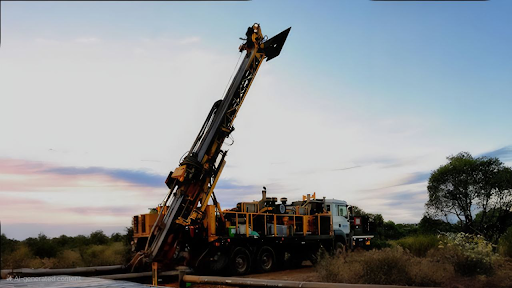
Askari Metals (ASX: AS2) is embarking on a transformative drilling campaign at its newly acquired Nejo Gold and Copper Project in Ethiopia. This marks a significant strategic shift for the Australian junior explorer, positioning it at the heart of one of Africa’s most promising yet underdeveloped gold belts. By launching drilling in November 2025, Askari aims to validate historical high-grade results and accelerate the development of what could become a major new gold district in central-western Ethiopia. This initiative not only represents a milestone for Askari, but also aligns with Ethiopia’s broader push to develop its mining sector as a key engine of economic growth.
Askari Metals entered Ethiopia in July 2025 by acquiring the 1,174 km² Nejo Project from Hong Kong–based Xingxu Mining (Xingguang Group). Located on the Arabian–Nubian Shield, Nejo sits in a Tier-1 gold corridor, surrounding the 1.7 million-ounce Tulu Kapi gold mine and aligned with the 3.4 million-ounce Kurmuk deposit. Executive Director Gino D’Anna called the acquisition “transformational,” noting it gives Askari full ownership of a flagship asset in one of Africa’s most promising gold regions. The project offers scale and high-grade potential, and lies directly along extensions of Tulu Kapi’s mineralised system, indicating that proven gold-bearing structures extend into Askari’s ground. By pursuing a brownfields strategy exploring around established deposits Askari reduces geological risk while positioning itself alongside major East African developments like Tanzania’s Nyanzaga and Sudan’s Meyas Sand projects.
Nejo’s appeal lies in its combination of high-grade historical drill results and vast unexplored potential. Despite standout past discoveries such as 7.1 meters at 30.3 g/t gold at the Dina target, 14.2 meters at 8.18 g/t (including 2 meters at 42.6 g/t) at Soyoma, and 44 meters at 1.7 g/t with visible gold at Guji less than 15% of the 1,174 km² license has seen systematic exploration. Many of these prospects, first identified by companies like Nyota Minerals and OreCorp around 2011, never received follow-up drilling. Askari is now digitising legacy datasets, including drill logs and geochemical surveys, and has defined 10 high-priority targets along a 60 km stretch of the Tulu Dimtu shear belt. With government approvals secured, the company began its exploration program in November 2025, focusing on two mineralised corridors: the 10 km Guliso Trend (hosting Soyoma, Dina, Chago) and the 9 km Guji Gudeya Trend (including Guji, Komto 1, and Komto 2). Field teams are conducting mapping, soil geochemistry, rock sampling, and integrating historical geophysics, with plans to fly new airborne surveys to refine drill placement. Drilling in Q4 2025 will target shallow high-grade zones and test extensions of the Tulu Kapi mineralised system, while also probing copper potential at the Katta target. Backed by strong support from Ethiopian authorities and early technical validation including confirmed gold-bearing quartz veins. Askari believes that disciplined exploration could quickly advance Nejo toward a maiden JORC-compliant resource and unlock significant value.
To finance its ambitious exploration plans in Ethiopia, Askari Metals strengthened its balance sheet after its cash reserves fell to just A$67,000 in September 2025. The company first sold its Australian subsidiary, First Western Gold Pty Ltd, owner of the Burracoppin project, to Forrestania Resources for A$850,000 (A$250k cash and A$600k in shares), marking a strategic exit from Australian gold to focus on Africa. It then launched a non-renounceable rights issue in late October 2025, offering one new share for every three held at A$0.01, targeting about A$2.3 million. The raise was well-supported by shareholders, including Director Gino D’Anna. Together, these moves are expected to deliver A$2–3 million in funding, providing the capital needed for drilling, field operations, and working capital at Nejo and the Uis lithium project in Namibia. By divesting non-core assets and raising fresh equity, Askari has de-risked its financial position and doubled down on its belief that Africa, particularly Ethiopia, is the foundation of its next growth phase.
Askari’s exploration push comes as Ethiopia positions itself as Africa’s next major mining frontier. Long overshadowed by regional players like Sudan and Tanzania, Ethiopia is now leveraging its vast share of the mineral-rich Arabian–Nubian Shield and implementing major economic reforms to attract foreign investment. In 2025, the government floated its currency, pursued IMF-supported debt restructuring, and signed $1.7 billion in mining and energy deals, signalling a shift to a more investor-friendly environment. At the same time, large-scale gold projects are advancing: Allied Gold’s $500 million Kurmuk mine is expected to begin producing 290,000 ounces annually by mid-2026, making it the country’s first modern industrial gold mine; KEFI’s Tulu Kapi mine, adjacent to Askari’s Nejo license, is on track to produce around 140,000 ounces per year with $240 million in financing secured. Smaller players like Akobo Minerals have also begun production, with its Segele mine inaugurated in 2024 by Prime Minister Abiy Ahmed as a symbol of Ethiopia’s mining potential. With official gold output having slumped to 4.2 tonnes in 2023, the launch of these industrial mines, combined with new entrants like Askari, could dramatically boost production, export revenues, foreign currency inflows, and regional development, cementing mining as a pillar of Ethiopia’s economic future.
As Askari Metals begins drilling at Nejo, expectations are high that the campaign could confirm extensions of nearby deposits like Tulu Kapi or reveal entirely new gold systems along the Guliso and Guji trends. A discovery on par with past hits—such as Dina’s 7.1 m at 30 g/t—would be transformative, fast-tracking Nejo toward resource estimation while reinforcing Ethiopia’s rise as a gold exploration hotspot. Yet challenges persist, from logistical hurdles and weak infrastructure to occasional regional instability, making local engagement and government cooperation critical. Askari has emphasised responsible exploration, building an in-country presence and working closely with authorities and communities to mitigate risks. Ultimately, Nejo is more than a company campaign; it reflects Ethiopia’s mining renaissance, fueled by reform, foreign investment, and the promise of untapped resources. The drill results expected in the coming months will determine whether this bold venture marks the beginning of Askari’s next growth chapter and cements mining as a new pillar of Ethiopia’s economic transformation.