● New Banking Model: CABS-AT turns banks into agents linking investors and borrowers.
● Risk Shift: Banks earn commissions while investors bear lending risk.
● Inclusive Finance: Collateral-free, insurance-backed loans expand access to credit.
● Global Impact: Patented innovation puts Ethiopia on the financial map.
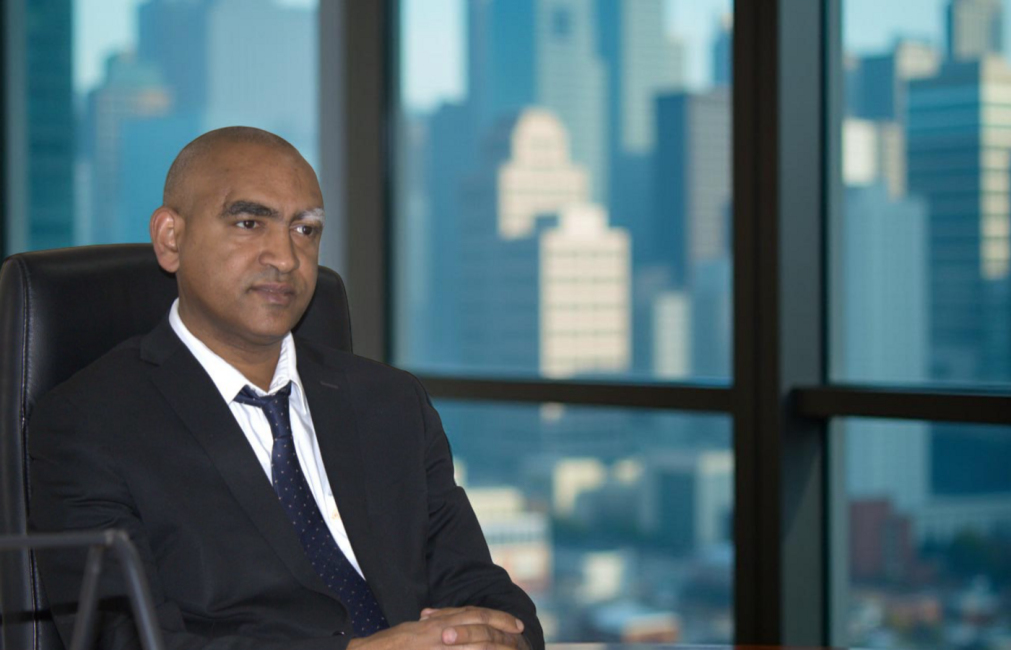
Ethiopian researcher Dr Ameha Tefera Tessema (DBL) has pioneered a groundbreaking financial model
called the Commission–Agent Banking System (CABS-AT), which reimagines how banks finance loans
by separating their capital from the lending process. Recently awarded both local and international patents
for its novelty and practical application, the model transforms banks from direct lenders into
intermediaries that connect investors with borrowers. Under this system, banks act purely as agents,
screening borrowers, managing disbursements, and overseeing repayments, while investors provide the
loan funds and bear the credit risk. The bank earns a commission for its services without exposing its
balance sheet to liquidity or default risk, allowing it to expand lending safely and efficiently. Developed
during Dr Ameha’s doctoral research, CABS-AT was designed to address liquidity constraints and risk
concentration in developing economies like Ethiopia, and his studies have shown that the model maintains
profitability and financial stability while channelling more capital to businesses. Its patent recognition
marks a milestone for Ethiopia in global financial innovation, aligning with the country’s ongoing reforms
to modernise its banking sector and promote financial inclusion. For young finance professionals,
CABS-AT offers an inspiring example of how creative, research-driven solutions can reshape
long-standing systems, empowering banks to become facilitators of capital, investors to access new
opportunities, and entrepreneurs to secure funding without straining traditional financial institutions.
At its core, the Commission–Agent Banking System (CABS-AT) redefines how credit flows by
introducing three key players into each transaction: the investor (fund provider), the borrower, and the
bank acting purely as an agent. In this model, the bank connects investors with borrowers, facilitates loan
contracts, and manages the process without lending its own money. Funds flow directly from the investor
to the borrower often through a trust account managed by the bank, while the bank earns a commission
for administering and supervising the loan. The bank oversees disbursement, ensures proper fund use,
collects repayments, and intervenes if issues arise, but it bears no credit or liquidity risk since it doesn’t
use its own balance sheet. Instead, credit risk lies with the investor and borrower, while liquidity risk is
virtually eliminated. CABS-AT’s structure allows for risk substitution, if an investor exits or a borrower
defaults, replacements can be introduced, ensuring projects remain funded and performing. Banks earn
commission-based fees rather than interest-rate spreads, and the pricing mechanism can adapt to various
financial systems, including conventional, Islamic, or trade-based finance. Collateral is optional;
insurance products can substitute it, enabling access to credit for startups and small businesses lacking
assets, thereby promoting financial inclusion. The model supports three flexible lending strategies:
Revolving Repayment Lending, where investor repayments are continually reinvested into new projects;
Non-Revolving Lending, where funds remain with one borrower until full repayment; and Depository
Lending, which lets ordinary depositors invest in portions of existing loans, much like a simplified
securitisation system. Together, these strategies keep money active, minimise systemic risk, and create a
dynamic framework that blends banking, capital markets, and insurance principles, offering a resilient,
inclusive, and innovative blueprint for modern finance.
At the heart of Dr Ameha Tefera Tessema’s Commission–Agent Banking System (CABS-AT) is a bold
rethinking of how financial risk is managed and shared, transforming both banking stability and access to
credit. Unlike conventional banks, which shoulder losses when borrowers default, CABS-AT positions
banks as agents that facilitate and supervise loans funded by investors, thereby insulating the banks from
both liquidity and credit risk. Investors assume risk in exchange for higher returns, while borrowersremain accountable through contractual and, where applicable, collateral or insurance-based safeguards.
By distributing risk among willing participants and allowing investors or borrowers to be substituted if
necessary, the system maintains stability even in the face of default or early withdrawal. Loan-default
insurance provides an added layer of protection, making collateral optional and extending access to
financing for small businesses and entrepreneurs without property or assets, an especially transformative
feature for developing economies like Ethiopia’s. This structure not only safeguards banks’ liquidity but
also sustains credit flow during economic downturns, since loans are off the banks’ balance sheets and
driven by investor capital. Furthermore, the model naturally aligns loan pricing with real market
conditions, helping balance liquidity, inflation, and capital demand in the wider economy. Beyond risk
management, CABS-AT promotes financial inclusion and innovation by empowering banks to act as
partners and mentors rather than gatekeepers, enabling startups and SMEs to access funding under
professional oversight. Its flexibility allows seamless adaptation to both conventional and Islamic banking
systems, through interest-based, profit-sharing, or trade-based contracts, and even facilitates cross-border
investments by connecting global investors with local borrowers through trusted agent banks. With
growing international interest following its patent recognition, CABS-AT stands as a pioneering Ethiopian
innovation that bridges traditional banking and modern fintech, offering a scalable, inclusive, and globally
adaptable model for sustainable finance.
The reception of Dr Ameha Tefera Tessema’s Commission–Agent Banking System (CABS-AT) has been
marked by both excitement and cautious anticipation, as Ethiopia’s regulators and banks consider how to
bring this paradigm-shifting model from theory to practice. While the National Bank of Ethiopia (NBE)
has yet to formally approve its implementation, discussions are underway to test it through NBE’s
regulatory sandbox program, a controlled environment where the system would be trialled with real
institutions and customers to evaluate its legal soundness, operational viability, and consumer protection
mechanisms. For banks, CABS-AT presents both a major opportunity and a learning curve: it offers a way
to expand lending and promote financial inclusion without straining their capital or liquidity, but it also
demands new competencies in investor management, loan supervision, and complex contractual
arrangements. Regulators, meanwhile, will need to adapt existing laws to define the rights and
responsibilities of investors, borrowers, and banks in this agency-based framework. Internationally, the
model’s patent protection signals its novelty and global applicability, opening possibilities for licensing
and collaboration beyond Ethiopia, positioning the country as a source of original financial innovation. At
this pivotal stage, the system stands validated by patent yet awaits real-world deployment, with Dr Ameha
urging policymakers and financial leaders to embrace its potential for reducing systemic risks and
broadening access to credit. In a broader context, CABS-AT aligns perfectly with Ethiopia’s ongoing
financial reforms and drive for inclusive growth: it could unlock new credit flows to small businesses and
entrepreneurs, bridge gaps between banking and capital markets, and inspire a generation of Ethiopian
finance professionals to innovate boldly. Ultimately, the model not only proposes a new way to lend, it
symbolises a new chapter in Ethiopian finance, where local creativity meets global relevance and
sustainable economic transformation.
As Ethiopia stands on the cusp of a new financial era, Dr Ameha Tefera Tessema’s Commission–Agent
Banking System (CABS-AT) represents more than just an academic breakthrough, it is a vision for how
emerging economies can reinvent finance on their own terms. By decoupling risk from lending and
redefining the bank’s role from creditor to facilitator, the model offers a pathway toward a more resilient,inclusive, and innovation-driven financial system. It speaks to Ethiopia’s moment in history: a nation
modernising its markets, opening its capital system, and nurturing a generation of thinkers determined to
shape the global financial conversation. Whether CABS-AT becomes a cornerstone of that transformation
will depend on the willingness of regulators and institutions to take the leap from tradition to innovation.
But one thing is certain, its very conception has already placed Ethiopia on the map of financial ingenuity,
proving that revolutionary ideas can emerge from Addis Ababa as confidently as from London or New
York